EMDR THERAPY

Trauma isn't just what happened. It's what still lives in the nervous system. Sometimes talking helps the brain make sense of an experience. Sometimes it isn't enough because the body continues to respond as though the danger is still present.
EMDR is an evidence-based therapy that helps the brain process distressing memories so they become less emotionally overwhelming. It doesn't erase the past, but it can change the way it is stored and experienced.
What Is EMDR?EMDR uses bilateral stimulation, such as eye movements or tapping, alongside carefully structured therapy to help the brain reprocess distressing memories.
As those memories are processed, they often become less vivid, less distressing and less likely to trigger the same emotional or physical reactions.
Through this process, you may begin to:
- Safely access difficult memories
- Stay grounded in the present while processing them
- Reduce the emotional intensity those memories still carry
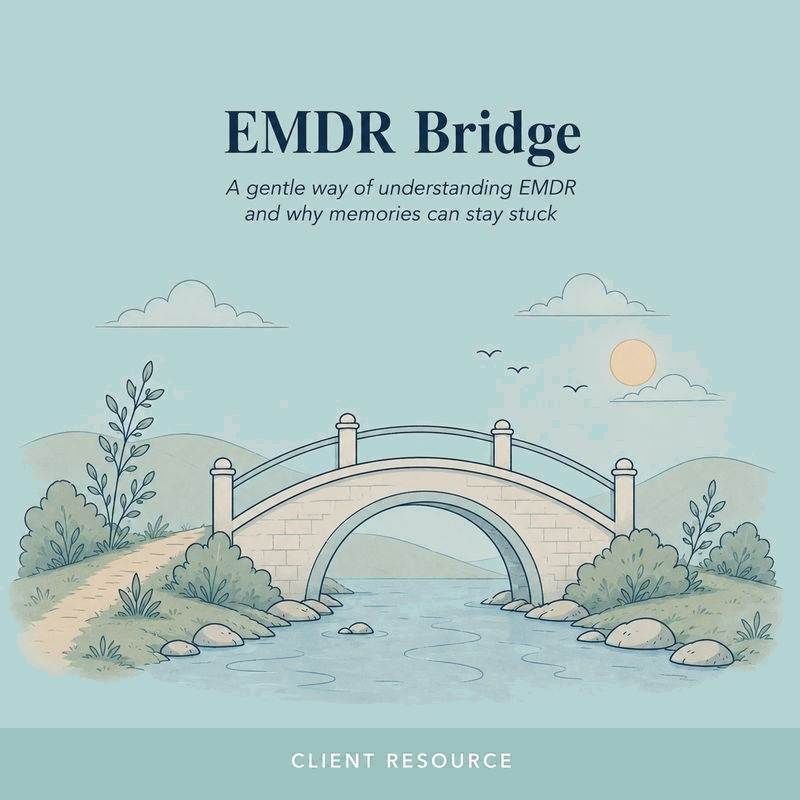 For this free download click on the image
EMDR is one part of therapy, not a replacement for it. Understanding patterns, exploring relationships, developing boundaries and making sense of your experiences remain an important part of the work.
By reducing the emotional intensity of traumatic memories, EMDR can make the wider therapeutic work more accessible. As the nervous system begins to feel safer, it often becomes easier to understand your experiences, recognise patterns and engage more fully in therapy. Whether EMDR forms part of ongoing counselling or is a focused piece of work in its own right, it can support emotional regulation and deeper processing.
→ RESOURCE LIBRARY
EMDR is especially effective for:
- PTSD and single-incident trauma
- Childhood emotional or relational wounds
- Intrusive thoughts, flashbacks, or triggers
- Deeply rooted shame
You may also find our Resource Library helpful while you're waiting to begin therapy or alongside your sessions.
Is EMDR Right for Me?
You don't need a formal trauma diagnosis to benefit from EMDR. You may find it helpful if you:
- Feel stuck in something that logic alone can't seem to shift
- Find yourself overwhelmed by memories, triggers or strong emotional reactions
- Notice that your body still reacts as though the danger is present, even when you know you're safe
- Feel as though part of you is still carrying the weight of what happened
EMDR helps reduce the emotional intensity of traumatic memories. Counselling provides space to understand patterns, make sense of your experiences, strengthen relationships and develop new ways of responding. Together, they support not only healing from the past, but also developing new ways of understanding yourself, relating to others and living in the present.
If you'd like to understand more about how EMDR fits within our wider therapeutic approach, you can read more on our Counselling and Psychotherapy page.
→ COUNSELLING AND PSYCHOTHERAPY
When the Past No Longer Holds the Present
EMDR doesn't erase the past, but it can unhook it from your present.
Healing doesn't mean forgetting what happened. It means what happened no longer has to shape every part of how you live today.