Understanding Shame
There is a particular kind of silence that follows a mistake. Not the silence of the room, but the silence inside you, the one that arrives before anyone else has said a word.
You replay the moment. You look for the exact second it went wrong. You already know, before anyone tells you, exactly how you would have done it differently.
That quiet, immediate verdict is shame. Not the event itself, but what happens in the half second after it.
Most people think they know what shame is. Embarrassment, perhaps, or guilt with the volume turned up. Shame rarely announces itself so plainly. It tends to arrive wearing something else entirely, and by the time you notice it, it has usually already rearranged the furniture of how you see yourself.
Recognise
Perhaps you check the email again before sending it, then check it a third time. Maybe its saying sorry for something that was never yours to apologise for. Do you find yourself laughing a little too quickly at a joke that stung, so nobody notices it landed?
None of these moments look like shame. They look like carefulness, or good manners, or an ordinary Tuesday. That is precisely how shame can operate. It does not always show up as a feeling you can name. It can show up as a way of behaving that has quietly become part of who you think you are.
It can arrive in smaller moments too, ones that barely seem worth mentioning even to yourself. Being interrupted mid-sentence and quietly deciding the point wasn't worth finishing anyway. Forgetting a name you were sure you knew, and feeling the warmth leave your face before anyone has reacted at all. Sending a message and receiving a reply that is shorter than usual, then spending the next hour deciding what you did wrong. A change in someone's expression, half a second long, that you carry with you for the rest of the day.
Perhaps you've noticed yourself over-explaining a decision nobody questioned, as though the explanation might protect you from a judgement that hasn't even been made. Perhaps you've also noticed the opposite in yourself, a sudden withdrawal from a conversation that was going perfectly well, because some old instinct decided it was safer to disappear before anyone got close enough to see something you didn't want seen.
The behaviours look different. The fear underneath them can be surprisingly similar.
Relieve
Here is what is often missed. Shame is not a character flaw. It is not evidence that something is fundamentally wrong with you. It can be a response learnt over time, often through experiences in which belonging, approval or connection seemed to depend on being a certain kind of person.
A child who is mostly praised when they achieve can begin to learn, without anyone meaning to teach it, that their worth is something to prove rather than something they already possess. A person living in a house where anger appears without warning may learn to read a room before they have even taken off their coat.
It rarely stops developing there. A workplace where mistakes are quietly noted rather than discussed can teach the same lesson in adulthood. A friendship group with an unspoken standard for how put-together you are expected to seem can do it too. The same can happen through being repeatedly misunderstood, judged for something you could not control, or made to feel like an exception to a rule everyone else seemed to know. Wherever dignity or belonging begins to feel conditional, shame has room to grow, whatever age you happen to be.
You are not broken. What you are carrying may make more sense when it is understood as something learnt in response to what was happening around you. These ways of responding may once have helped you preserve connection, reduce conflict or protect something important in yourself.
The discomfort you feel now is not proof that the old story about yourself is true. It may be a sign that the story is still running quietly in the background, long after the situation that helped write it has changed.
Reveal
Shame has a habit of disguising itself as other things, and this is where it becomes difficult to spot.
Perfectionism can carry shame beneath it, particularly when getting something exactly right begins to feel like protection against being found lacking. It can look like reading an email three times before sending it, rearranging a sentence that was already clear, or noticing every small imperfection in something that, to someone else, might already look finished. It is rarely about the email, or the sentence, or the piece of work. It is about staying a step ahead of a judgement that hasn't been made yet, in the hope that thoroughness might keep it from arriving at all.
Shame can sit beneath people-pleasing too, especially when keeping other people comfortable has become closely tied to remaining acceptable, welcome or safe. Sometimes it can recruit anxiety to look ahead for it, scanning for criticism, exposure or the possibility of getting something wrong.
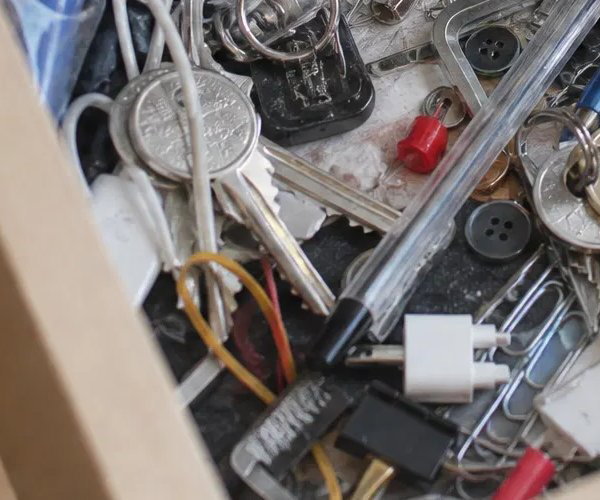
Think of it like a junk drawer in a kitchen. Everyone has one. Over the years, things get put in there because there was nowhere else obvious for them to go, an old key, a rubber band, a receipt from a shop that closed down long ago. Nobody plans a junk drawer. It accumulates, one small decision at a time, until it becomes difficult to find anything in it without disturbing everything else.
Shame can work in a similar way. Each small moment of not-quite-belonging, not-quite-enough, gets put somewhere out of sight, because there was nowhere obvious for it to go at the time. Years later, you reach in for something else entirely, a simple decision, an ordinary disagreement, and your hand closes around something far older than the moment calls for.
The reaction may seem out of proportion when viewed only through the present moment. It can make more sense when we notice what else has been stored alongside it.
Restore
Sorting a drawer like that does not happen by tipping it out all at once and hoping for the best. It happens slowly, one item at a time, noticing what is still useful and what has been sitting there out of habit.
Shame can be similar. It rarely responds well to being confronted head on or told firmly to leave. Change can begin with noticing that a reaction seems to belong partly to the present and partly to somewhere else. Curiosity can create a little space around it. What did this response once protect? Whose judgement does this voice sound like? When did being acceptable become so closely tied to being safe?
There is a difference worth sitting with here, between being excused and being seen. Being excused can mean asking for what happened to be set aside. Being seen is different. It allows the mistake, the regret, the moment you wish had gone differently, to exist alongside everything else that is true about you, rather than standing in for the whole of it. You can recognise what happened, take responsibility where it is genuinely yours to take, and still remain more than the moment you are most afraid someone noticed.
Shame grows easily in the belief that if the whole of us were seen, something important might be withdrawn: approval, belonging, respect or love. Part of what can change it is the experience of being known without being reduced to the thing we regret, fear or hide. It is not about being excused or rescued, but about being seen more fully.
This is not about becoming a different person. It is about becoming freer to recognise the person already there, underneath everything learnt in order to feel safe enough to be seen.
Return
Understanding shame does not make it disappear overnight. It can do something quieter and, in the end, more useful. It gives you a way of recognising the feeling for what it may be, rather than automatically mistaking it for the truth.
Understanding shame does not erase the history that shaped it. It can, however, make it possible to see that history without continuing to mistake it for identity.
The apology that wasn't yours to give. The explanation nobody asked for. The drawer, finally, beginning to make sense.
Perhaps some of what you have called your personality has actually been something you learnt to carry.
Counselling can begin with noticing what has become difficult to carry alone.
Written by: Kay Parkinson
Place to Talk Therapies Building Resilience | Inspiring Hope
Kay is a UK-based counsellor, psychotherapist and EMDR practitioner. Her writing explores the ways our experiences can shape identity, self-worth and relationships, with a particular interest in creating greater understanding through curiosity, compassion and authentic honour.


