Counselling in Burbage: Roger
Roger is an MBACP-accredited counsellor. Offering individual counselling, couples therapy and EMDR, in English or Punjabi. Individual | Couples Therapist | EMDR | Neurodivergent-Affirming, Trauma-Informed & Shame-Sensitive Burbage (LE10) and online

I believe meaningful change grows from a safe and trusting therapeutic relationship. Rather than rushing towards solutions, I take time to understand your experiences and what may be keeping you feeling stuck.
As an integrative counsellor, I draw on a range of therapeutic approaches and shape the work around you. I have experience supporting people with trauma, loss and bereavement, anxiety, depression, relationship difficulties, stress, health-related concerns, life transitions, and questions around identity, culture and spirituality.
- Trauma-informed counselling in Burbage for adults feeling anxious, overwhelmed, or stuck in old patterns.
- PTSD/C-PTSD
- Couples counselling available in Burbage and online.
Sessions are relational, grounded, and shame aware. Therapy is not about fixing you; it is about creating enough safety for your nervous system to settle, so you can begin to process experiences at your own pace.
In-person counselling in Burbage, LE10.
How counselling can help.
People come to counselling for many reasons. You may be experiencing anxiety, trauma, grief, relationship difficulties or a sense of feeling disconnected from yourself or others.
Sometimes you may not have clear words for what is happening, only a sense that something does not feel right.
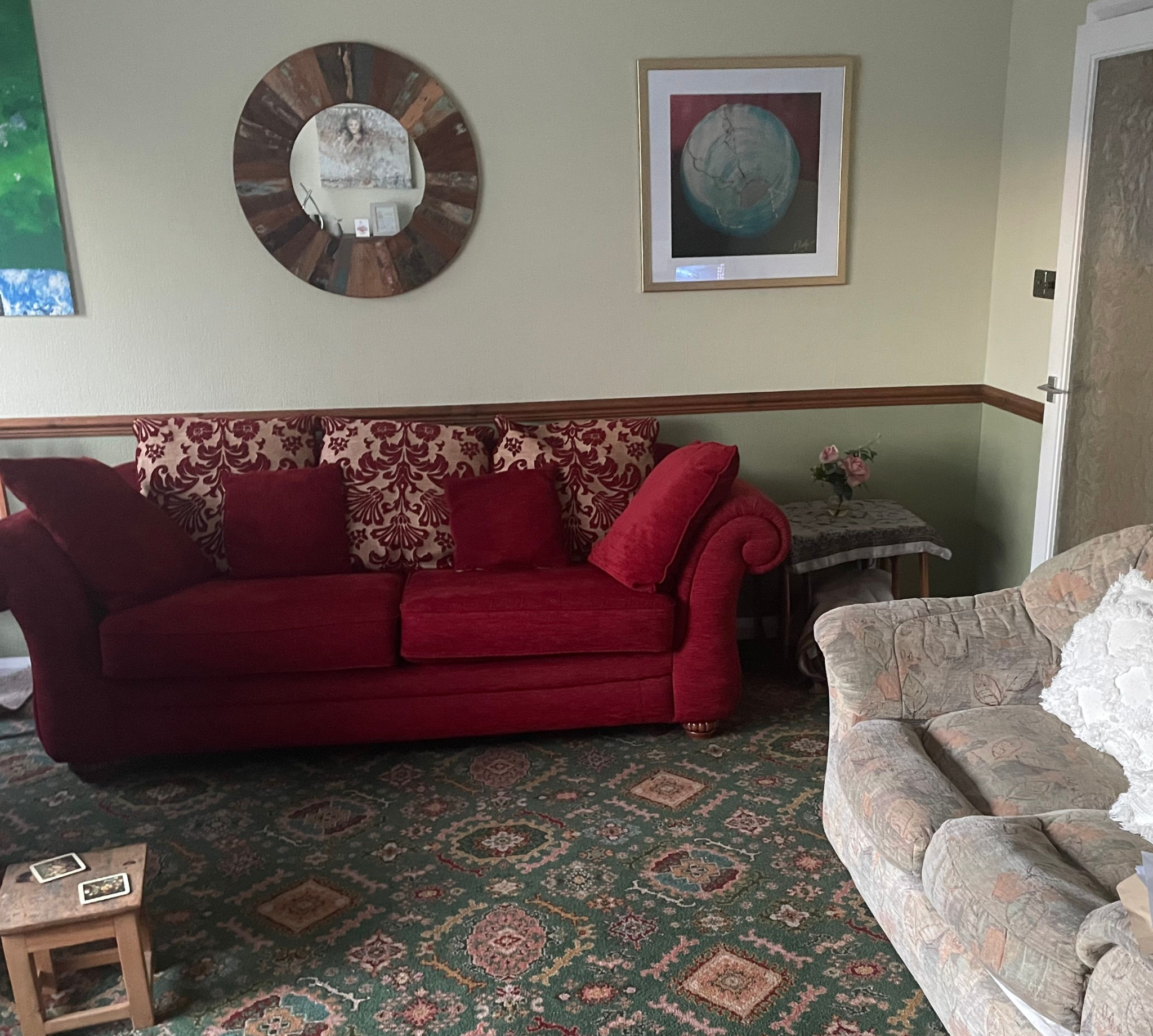
Roger's Counselling Room
Trauma informed therapy supports you to:
- Understand your emotional and physical responses with compassion
- Reduce overwhelm and nervous system activation
- Work gently with trauma, shame, and long-held patterns
- Reconnect with a sense of steadiness and choice
- Feel less alone with what you are carrying
Couples Therapy
Alongside individual counselling, I also work with couples, offering a calm, neutral space to work through communication difficulties, trust and disconnection, with honour for both partners' experience. My aim isn't to take sides, but to help you understand each other more clearly and work out, together, what you both need going forward.
→ FIND OUT MORE ABOUT COUPLES COUNSELLING
EMDR Therapy
I am also an EMDR practioner.
EMDR (Eye Movement Desensitisation and Reprocessing) is an evidence-based approach that supports the processing of traumatic or distressing experiences. It can be particularly helpful where talking alone does not feel sufficient.
Suitability for EMDR is always explored carefully to ensure the approach feels safe, appropriate, and aligned with your needs.
Online therapy is also available
Individual, couples and EMDR therapy are also available online.
Online therapy provides flexibility while maintaining the same professional, relational and ethical standards as face-to-face work.
FIND OUT MORE ABOUT ONLINE THERAPY
Getting Started
You are welcome to begin with a free introductory call to ask questions, tell me a little about what has brought you to counselling and get a sense of whether working together feels right.There is no obligation to book afterwards.
To enquire about availability and next steps, please get in touch to arrange an initial conversation.
Frequently Asked Questions
- How do I know if counselling is right for me?
People come to counselling for many reasons. You may be experiencing anxiety, trauma, grief, emotional overwhelm, or a sense of feeling stuck or disconnected. You do not need to have a clear understanding of what is “wrong” to begin therapy.
An initial conversation can help explore whether counselling feels like the right support for you at this time.
- Do I need to know what type of therapy I am looking for?
No. You do not need to decide on a particular type of therapy before getting in touch.
Therapy at Place to Talk Therapies is trauma-informed and relational, meaning the work is shaped around you rather than a fixed method. Together, we can explore what feels most supportive for your needs, pace, and circumstances.
- What happens in the first session?
The first session is an opportunity to begin getting to know each other and to explore what has brought you to counselling. You can share as much or as little as feels comfortable.
There is no expectation to talk about anything before you are ready. The focus is on creating safety, understanding your experiences, and considering how therapy might support you moving forward.