Grief Doesn't Climb. It Weaves
You were probably taught that grief has stages. Denial, anger, bargaining, depression, acceptance, in that order, like rungs on a ladder. Climb them properly and you arrive somewhere solid.
Then someone you loved died, or a marriage ended, or a diagnosis changed everything, and none of it worked like that at all.
You cried on a Tuesday and laughed on a Wednesday and felt guilty about the laughing. You thought you had reached acceptance, and then a smell in a supermarket aisle put you straight back at the beginning.
You functioned perfectly at work while something in you quietly came apart. Nobody mentioned that this was allowed.
What You Already Know
You know the particular ache of ordinary objects. A coat still on the hook. A voicemail you cannot bring yourself to delete. A chair nobody sits in any more, that you still angle towards the television out of habit.Perhaps you've noticed how grief doesn't announce itself politely. It arrives while you're choosing vegetables. It arrives in the pause between someone asking how you are and you deciding, again, what version of the truth to give them.
You know the exhaustion of being fine in front of people. The specific tiredness of holding your face a certain way so that colleagues don't have to feel awkward. You know what it's like to grieve something that isn't a death at all, a relationship, a version of your future, your health, a job you built your identity around, and to feel like you're not allowed to call it grief because nobody died.
None of this means anything has gone wrong with you.
Why the Staircase Was Always the Wrong Shape
The stage model came from research into people facing their own terminal diagnosis, not from research into everyone else's grief. It was never meant to be a map for the rest of us. Somewhere along the way it became one anyway, because a staircase is comforting. It promises an end point. It tells you where you should be by now.
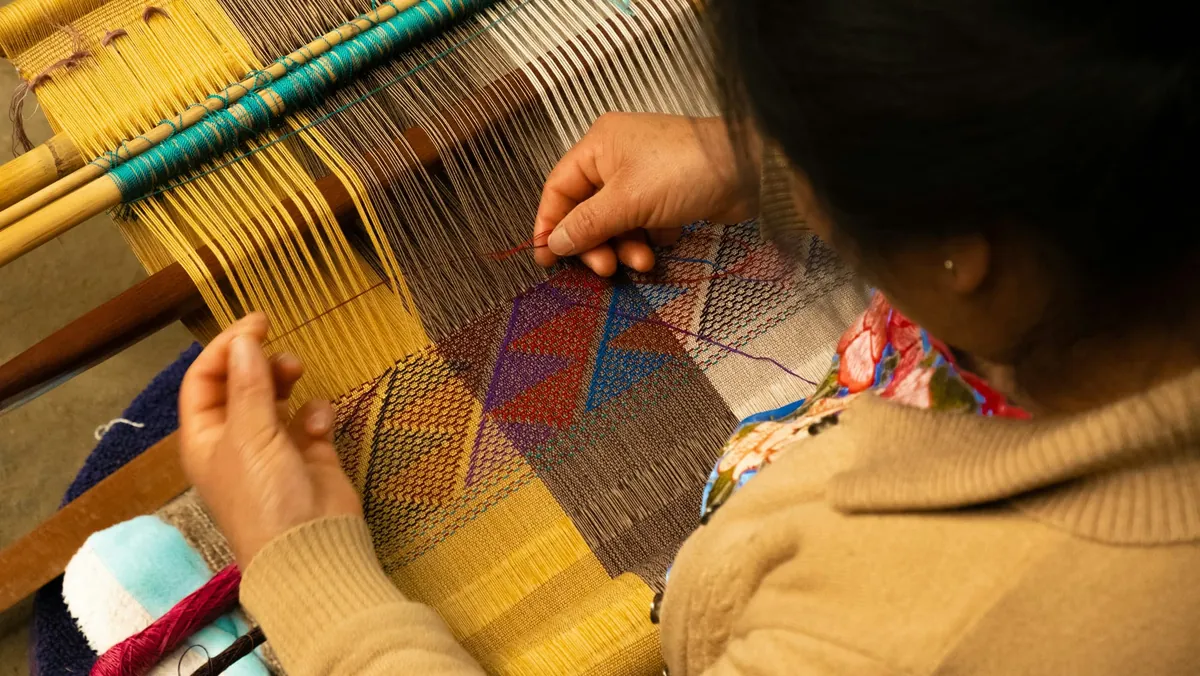
Grief doesn't move in a line. It weaves, the way a piece of cloth is made from many threads running in different directions at once, some pulled tight, some left loose, none of them finished before the others begin. You don't work through one thread and move on to the next. You might spend a morning steeped in the ache of what's changed, and by afternoon find yourself quietly grateful for something they gave you, and both of those can be true within the same day without cancelling each other out.
This is why acceptance can feel like it arrives and then disappears again. It isn't that you failed to hold onto it. It's that grief was never a destination you reach once and keep. It's closer to a relationship you keep having with what you've lost, one thread of it pulled taut by an anniversary or a piece of music, another lying quiet for months, the whole pattern shifting as you change rather than resolving into something finished.
Anger doesn't always come before bargaining. Depression doesn't always follow anger. Some people never bargain at all. Some people feel a strange, guilty relief alongside the loss, particularly after a long illness or a difficult relationship, and then carry shame about the relief on top of the grief itself.
All of this is ordinary. None of it means you are grieving wrong.
The Different Threads Running Through It
Some of what you're carrying is the ache itself, the disruption to your body and your days, the sense of being altered by something you didn't choose. That's one thread. It sits alongside another, quieter one, the connection itself, what this person meant to you, including the parts that were complicated or never quite resolved. Honouring that connection doesn't require the relationship to have been simple.
There's often a thread of things unsaid too, words you never got to offer or receive, grief you've felt unable to speak aloud because it didn't look like grief is supposed to look, a loss nobody else seemed to recognise as a loss at all. That thread tends to carry the most shame, because silence and shame keep each other company. Naming it, even quietly, even just to yourself, tends to be where some of the relief lives.
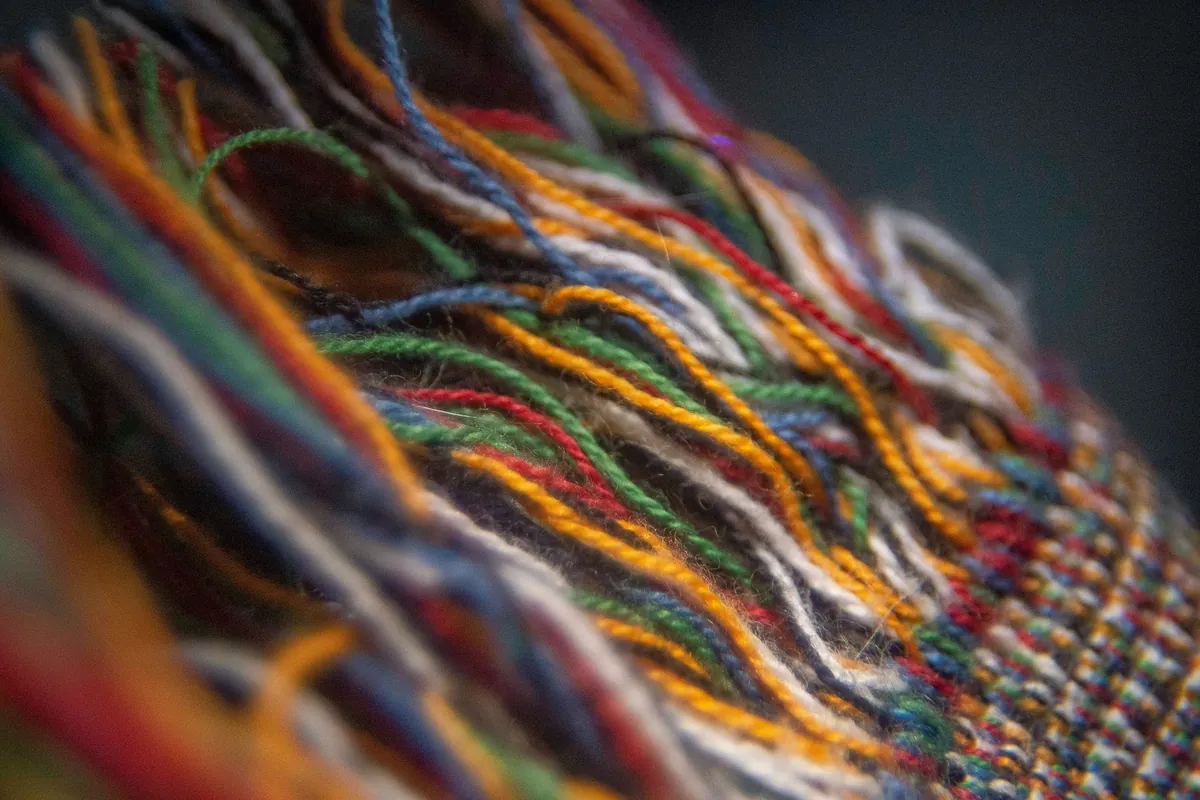
Running through all of it, usually the last thread anyone reaches, is something closer to gratitude, not instead of the grief, and never forced. Just the recognition, when it comes, of what the relationship gave you, and how some of it continues in the way you love the people still around you.
None of these threads has to be pulled in order. You can sit with one for a long time and barely notice the others. You can return to a thread you thought you'd finished with and find it's still very much alive. That isn't regression. It's simply what a woven thing looks like when you look closely at it.
The Guilt That Rides Alongside the Grief
Grief rarely travels alone. It tends to bring shame with it, uninvited, and shame is quieter and harder to name than sadness. It sounds less like I miss them and more like I should be further along by now, or other people seem to be coping better than me, or I'm too much for everyone around me.
You might find yourself apologising for crying in front of people. Explaining, unprompted, why you're still finding this hard eighteen months later. Checking your own grief against some invisible scoreboard and quietly deciding you're failing it.
That checking is exhausting, and it is not evidence that something is wrong with you. It's evidence that you were handed a script early on, that grief has a shape and a schedule, and that anything outside that shape must mean you're doing it badly. You were never doing it badly. You were doing something without a fixed shape and trying to force it into one anyway.
There's a particular guilt that turns up around ordinary life carrying on. A moment of normality, a proper laugh, an afternoon you didn't think about them at all, and then the quiet accusation that follows it, as though rest is a kind of betrayal. It isn't. Life and grief are able to sit in the same room together. One returning doesn't mean the other has left.
Grief also carries guilt about the relationship itself, not just the loss. The conversation you never had. The thing you said in anger that you can't take back. The years you spent estranged before a reconciliation came too late, or didn't come at all. This kind of grief is layered, and it deserves more room than time heals all wounds tends to give it.
What This Isn't
This isn't a suggestion to abandon structure altogether and simply wait for grief to pass. Structure can help. Rituals help. Marking anniversaries, visiting a grave, keeping a particular ornament out at Christmas, telling stories about the person you lost, these things matter and they are not signs of being stuck.
This also isn't a claim that grief never eases. It usually does, in its own time, in its own uneven way. Yet it eases the way a piece of cloth softens with handling, not the way a wound closes over and disappears. The threads are still there. They simply stop catching on everything the way they once did. The absence becomes something woven into the pattern of your life rather than something that stops you living it.
What Actually Helps

What tends to help isn't forcing yourself through stages in the right order. It's having somewhere to bring the whole, contradictory experience of it, the relief sitting next to the sorrow, the anger sitting next to the tenderness, without needing to tidy it up first for someone else's comfort.
It helps to have someone who won't flinch when you say something has been hard for longer than seems acceptable, and who won't quietly suggest it's time to move on. It helps to be believed when you say the grief changed shape rather than disappeared. It helps enormously to stop measuring your grief against anyone else's timeline, including a version of your own timeline you set for yourself in an earlier, less informed moment.
It also helps to notice where you still feel the person's presence, in a habit you've kept, a place you return to, a way of speaking that's crept into how you speak. That bond doesn't have to end for the grief to soften and it helps to treat yourself with the same patience you'd offer anyone else carrying something this heavy, rather than the particular harshness we tend to reserve only for our own grief.
You are allowed to grieve something that isn't a death. You are allowed to grieve slowly, or in bursts, or in ways that don't look like grief from the outside at all. You are allowed to feel better for a while and then feel it again. None of that undoes the progress you've made. It simply means you're human, and loss doesn't come with an instruction manual, whatever the diagrams suggested.
You're not broken. You're carrying something that never had a straight line to follow in the first place.
If what you've just read feels familiar, counselling offers a place to bring it exactly as it is, without needing to explain or justify why it's affecting you the way it is.
You don't need to feel ready or have the words prepared. You just need somewhere honest to start.
Written by Kay Parkinson, MBACP (Accred) psychotherapist. Place to Talk Therapies offers individual counselling in person and online across the UK.
www.placetotalktherapies.co.uk
The Threads of Grief and other wellbeing resources are available at the PLACE TO TALK Payhip store, click the image below.
Written by: Kay Parkinson
Place to Talk Therapies
Building resilience | Inspiring hope
Kay is a UK-based therapist specialising in shame- and trauma-informed, neurodivergent-affirming practice. She is passionate about fostering empathy, authenticity, and understanding in therapeutic and professional relationships. Through her writing, Kay encourages reflective, compassionate approaches that honour the complexity and resilience of the human experience.


