Pregnancy and Baby Loss: Why Grief Can Feel So Invisible
When a baby dies before the world has had the chance to meet them, the grief can be enormous and almost unseen by anyone else.
There is a date on the kitchen calendar that nobody else in the house mentions any more.
Perhaps it was written in pencil, the way people write things they are hopeful about but not yet sure of. Perhaps it was never written down at all, and lives instead in the part of you that still counts: the due date, the day of the scan, the day everything changed. Life around you has turned the pages, and the calendar on the wall looks like everyone else's. Yours holds dates that only you can see.
You still know the due date without looking.
This is one of the strangest parts of pregnancy and baby loss. Something enormous has happened, something that has changed how you sleep, what you notice and who you are, while colleagues, neighbours and even some family members may barely know anything happened at all. You go to the shop for milk, someone asks how your weekend was, and the grief comes with you everywhere without anyone else being able to see it.
Pregnancy and baby loss takes many forms: miscarriage, ectopic pregnancy, molar pregnancy, termination for medical reasons, stillbirth, the death of a baby in the days or weeks after birth. Losses around fertility treatment carry their own grief too, including cycles that never became a pregnancy at all, and I come back to those later. Baby Loss Awareness Week runs from 9 to 15 October each year, and for many people it is the one week when these losses feel allowed to exist in public. I am writing this for anyone who carries one, whether it happened last month or thirty years ago.
Is it common to grieve this much after miscarriage?
Many people grieve a great deal after miscarriage, stillbirth or pregnancy loss, because they have lost a baby, a hoped-for future, or both. It can feel out of proportion only because so little around you reflects its size.
Most grief arrives with a shape other people recognise. There is a name, a face, a funeral, a set of memories that friends and family hold alongside you. Baby loss often comes without most of that. The pregnancy and the baby may have been closely known by you, while barely visible to anyone else.
The pregnancy app kept sending weekly updates for a fortnight afterwards.
Kenneth Doka called this disenfranchised grief: grief that is felt in full but not openly acknowledged or supported by the people around it. Nothing about the grief itself is lacking. What is missing is the recognition.
Someone says "at least it was early", and you hear yourself agreeing.
People who say these things rarely mean harm. They reach for something to say, and what they find tends to shrink the loss down to a size they can manage. It can leave you wondering whether you have the right to feel this much, and whether a loss at eight weeks counts for less than one at thirty.
There is no hierarchy here. The number of weeks does not decide how real a baby was to you, or how much you are allowed to miss them. A loss at six weeks after years of fertility treatment, a stillbirth at full term and a termination chosen out of love after devastating news can each break a heart completely. Attachment in pregnancy often begins long before the first scan, sometimes before the test has even turned positive. The depth of grief is not reliably measured by a count of weeks, because attachment, hope, history and what the pregnancy meant can all shape the loss.
For many people, grief is soon joined by something heavier. After baby loss, many people find themselves going back over the days or weeks before it happened, looking for the moment something might have gone wrong.
You replay the week before, searching for the thing you missed.
The mind moves through the coffee, the heavy shopping bags, the difficult month at work, turning each one over as possible evidence. Blame, painful as it is, offers a kind of order: if something you did caused the loss, something you do differently might prevent the next one. Many early miscarriages are linked to chromosomal differences that were outside anyone's control, and people are often told this more than once. Hearing it rarely settles the feeling, because the feeling was never built on information. This is where grief can begin to turn into shame, a sense that it was not only the pregnancy that failed, but you.

What else is lost when a pregnancy ends?
The baby sits at the centre of the loss, and many other things can go with them. These secondary losses are rarely named, which is part of why the grief can feel so hard to explain to anyone else.
There is the future you had already begun to live in: the name you had been trying out, the way you pictured next Christmas, the spare room that was going to become a nursery. There is the role you were stepping into, whether that was becoming a parent for the first time or a parent again, and the version of yourself who was about to arrive.
There is trust in your own body. Many people describe feeling let down by a body that seemed to be doing everything right, or feeling cut off from it altogether. For the person who carried the pregnancy, the loss is often physical as well as emotional, with bleeding, surgery, hormones slowly settling and sometimes milk arriving for a baby who is not there.
There is the innocence of pregnancy itself. Before a loss, a positive test can feel like nothing more complicated than good news. Afterwards, a future pregnancy may be lived week by week, with every twinge read as a verdict and every appointment felt as an exam. Friends announce at twelve weeks with confidence, while you may not feel able to celebrate until the baby is in your arms, if even then.
There is certainty, the ordinary belief that if you do the right things, life tends to turn out well. There can be losses in relationships too: the friend who drifts away because she does not know what to say, the relative who never mentions it again, the colleague whose pregnancy is following the same timeline yours would have followed.
A friend's scan photo appears on your phone, and you congratulate her before you feel anything at all.
Envy is one of the least spoken parts of baby loss, and one of the most shame-laden. A jolt of pain at someone else's announcement, finding a reason to miss the baby shower, leaving the room when a newborn is passed around: all of it can feel like proof that grief has made you bitter. More often it is a measure of how much you wanted what they have, and that wanting deserves tenderness rather than judgement.
You notice the pushchairs in the supermarket now.
Perhaps you've found yourself apologising for still being upset months later. Perhaps you've stopped mentioning it altogether, because the silence that follows feels heavier than keeping it to yourself.
Why do partners grieve differently after baby loss?
Partners often grieve differently because they are carrying different parts of the same loss, frequently while trying to protect each other from it.
Your partner went back to work on the Monday.
For a non-birthing partner, the loss can be every bit as real and far less visible. Many notice they are asked how the other person is doing, and seldom how they are doing themselves. They become the steady one, making the phone calls and holding the practical details, while their own grief waits in a queue behind everything else.
Couples can grieve at different speeds and in different languages. One wants to talk about it every evening, while the other goes quiet, or busy, or back to the gym. Each can read the other's way of coping as a sign of caring less, when often the opposite is true: two people each trying to shield the other from the size of their own sadness. Understanding that difference will not make the loss smaller, though it can stop it from becoming a distance between you.
For people going through fertility treatment, loss can arrive in layers. A cycle that does not work, a positive test that fades, a transfer that ends in bleeding, each followed by pressure to decide about the next round before the last one has been grieved. Friends may not have known the treatment was happening at all, which means there is nobody to tell when it stops. For anyone facing loss without a partner, the absence of someone who shares the memory can become part of what hurts.
How long does grief after pregnancy loss last?
There is no set length for grief after pregnancy or baby loss, and no point at which it ought to be finished. For many people the sharpest pain softens over months, while the loss itself remains part of their story for the rest of their life.
It often returns around particular dates: the due date, the anniversary of the loss, Mother's Day and Father's Day, the first day of school for children who would have been the same age. These days can feel especially hard because they mark a life that was expected and did not arrive, and because nobody else may remember them. Grief that surfaces on these days is love meeting a day that was meant to be different, rather than a sign that you have gone backwards.
You count how old they would be now.
Dennis Klass and his colleagues offered a gentler picture of grief than the old idea of letting go, one they called continuing bonds. Many bereaved parents recognise something steadier here: the relationship with the baby they lost carries on, changed in form, instead of ending.
That can look like saying their name out loud, or planting something that comes back each spring. It can look like lighting a candle at seven in the evening on 15 October, when the Wave of Light moves through the time zones and families across the world do the same. It can also look like silence. Some people want to talk about their baby often, while others prefer to keep that relationship private and visit it in their own time. Both are ways of remembering, and neither needs correcting.
The scan photo lives in a drawer you don't open often.
When might counselling help after miscarriage or stillbirth?
Counselling can help at any point after pregnancy or baby loss, whether the loss was recent or many years ago. There is no level of distress you need to reach before it counts as worth talking about.
Some people come within weeks, when the grief feels too big to carry alone or there is nobody left who wants to hear about it. Others come decades later, when a new loss, a menopause, a grandchild's arrival or a daughter's pregnancy brings the old grief back into the room. People also come when grief is putting strain on their relationship, when a new pregnancy feels unbearably frightening, or when self-blame has settled in and will not move.
For some, what lingers is less like sadness and more like fear. Jessica Farren and colleagues at Imperial College London found that almost a third of women showed signs of post-traumatic stress a month after early pregnancy loss. The hospital corridor can replay at night, the smell of a clinic can set the heart racing, and the route home may start to take a detour around the maternity entrance. These are common responses to a frightening experience, and they can sit alongside grief without cancelling it out. For some people, trauma-focused approaches such as EMDR may help traumatic memories feel less immediate and easier to hold as something that happened in the past.
Counselling after baby loss is not about being told how to feel or when to be finished. It offers an hour where the pregnancy, the baby, the hospital, the anger and the envy can all be spoken about without anyone flinching or hurrying you along. You do not need to arrive with the words already in place, or feel certain it is the right time.
Continuing life and continuing a bond
Healing after baby loss is rarely about forgetting, and the calendar does not need to go blank for life to continue.
The question underneath so much self-blame is some version of "what is wrong with me?" Grief asks something more honest: what did I lose, and what did it mean to me? The first question keeps you on trial. The second makes room for grief without turning it into a verdict on you.
For the calendar in the kitchen, healing often means letting those dates be written in ink. The due date and the anniversary were always part of your story, and what returns is permission to let them be seen, first by you and then, if you choose, by the people you trust. Moving forward and holding on were never opposites.
You are allowed to still be sad about this.
The date is still there.
The love that wrote it is still there too.
Some of the blame you have carried may never have belonged to you.
The calendar keeps turning, and there is room on it for every child who was loved, including the ones the world never got to meet.
Written by: Kay Parkinson Place to Talk Therapies
Kay is a UK-based therapist. Her writing explores how experience can shape self-worth, relationships and the way we see ourselves, with a particular interest in helping people move from judgement towards greater compassion and honour for themselves. Counselling is available in person across Bournemouth, Ferndown and Burbage, and online across the UK.
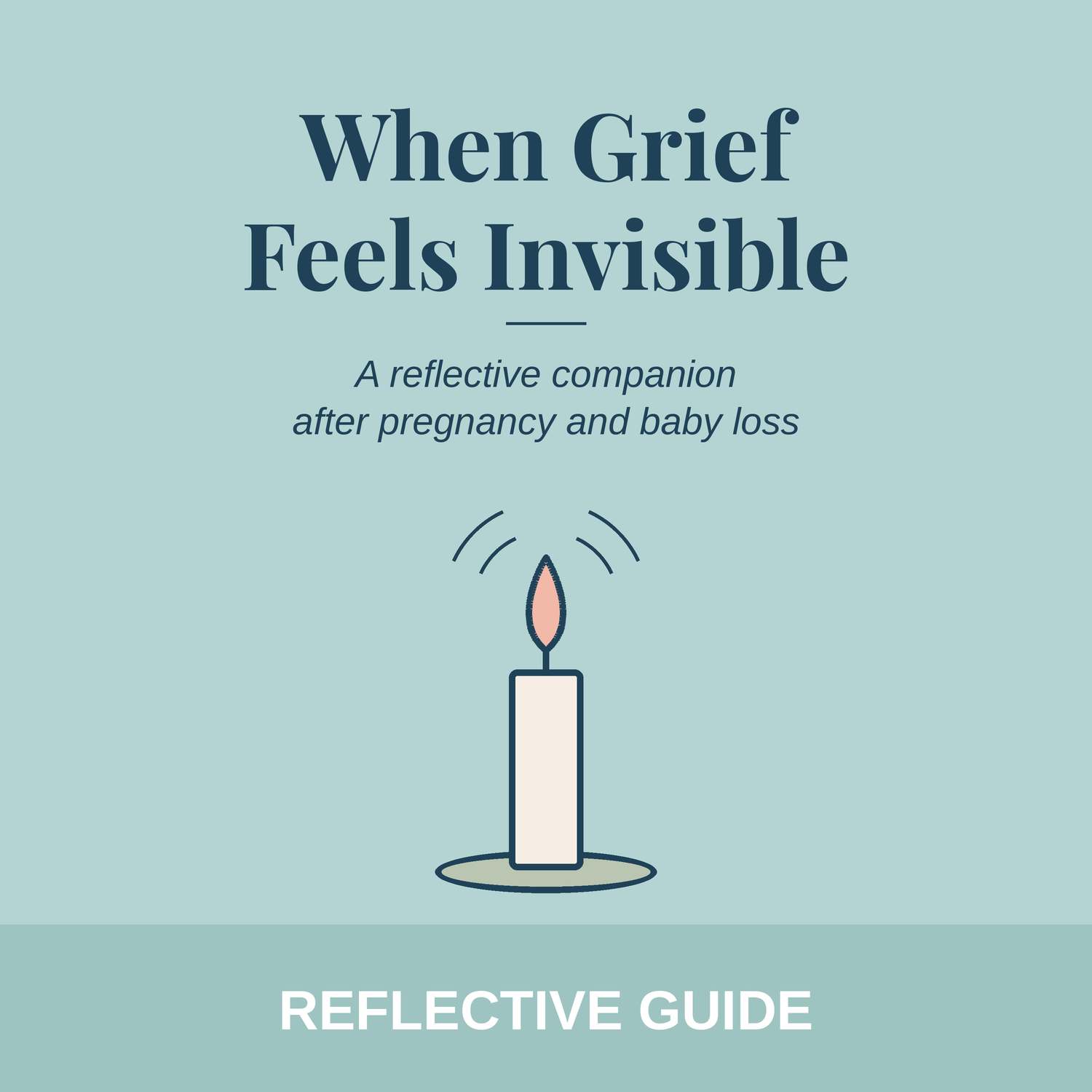
A reflective companion to this article
A reflective companion to this article 'When Grief Feels Invisible' offers a gentle space to mark important dates, notice what else has been lost, remember in a way that feels right for you, and reflect on what support might help.
Available as a printable and fillable PDF | £6
Sources
Doka, K.J. (ed.) (1989) Disenfranchised Grief: Recognizing Hidden Sorrow. Lexington, MA: Lexington Books.
Farren, J., Jalmbrant, M., Falconieri, N., Mitchell-Jones, N., Bobdiwala, S., Al-Memar, M., Tapp, S., Van Calster, B., Wynants, L., Timmerman, D. and Bourne, T. (2020) 'Posttraumatic stress, anxiety and depression following miscarriage and ectopic pregnancy: a multicenter, prospective, cohort study', American Journal of Obstetrics and Gynecology, 222(4), pp. 367.e1–367.e22.
Klass, D., Silverman, P.R. and Nickman, S.L. (eds) (1996) Continuing Bonds: New Understandings of Grief. Washington, DC: Taylor & Francis.