What Your Anger Is Trying to Protect
Looking underneath the reaction to the part of you that needed defending.
You said the thing you did not mean to say. The words came out sharper than you intended, louder, and now there is a particular quiet in the room. Maybe the other person has gone still. Maybe you have. Either way, you are already running the replay, already gathering the evidence against yourself, already deciding that this is proof of something you have long suspected about who you are.
You are not the only one who does this. Anger arrives, and almost before it has finished arriving, the apology is forming. The flinch comes faster than the feeling. For a lot of people, the anger itself is barely allowed to exist before it is overwritten by a more familiar response, which is the certainty that they have got it wrong again.
What rarely gets said is that the anger was doing something. It was not random, and it was not the flaw it felt like. It was standing in front of something, the way a body stands in a doorway when it does not want anyone to come further in. The work is not to get rid of the anger. The work is to find out what it was guarding.
The Reaction Is Rarely About the Thing in Front of You
Someone leaves the dishes again. Someone interrupts you in a meeting. Someone uses a tone you cannot quite name but feel instantly in your chest. The reaction that follows is often far larger than the moment seems to warrant, and part of you knows this even as it happens. There is the size of the trigger, and there is the size of the response, and the gap between them is where the real information lives.
That gap is not evidence that you are overreacting. It is evidence that the moment has touched something older. The dishes are not really about the dishes. The interruption lands on every other time you were spoken over and learned to fold yourself smaller. The tone arrives carrying the weight of a voice from much earlier, one you may not even consciously remember.
Anger that seems disproportionate is usually proportionate to something. It is just measuring against a history the present moment cannot see. When you treat the size of the feeling as shameful, you lose the chance to read what it is actually telling you. The intensity is the message, not the malfunction.
This is worth slowing down for, because the speed at which we condemn our own anger is part of how it stays misunderstood. We meet the heat with judgement, the judgement shuts the door, and the thing the anger was pointing toward stays unexamined. The reaction gets named as the problem, and the part of you that was trying to be heard goes quiet again.
Underneath Most Anger Is a Boundary That Was Crossed
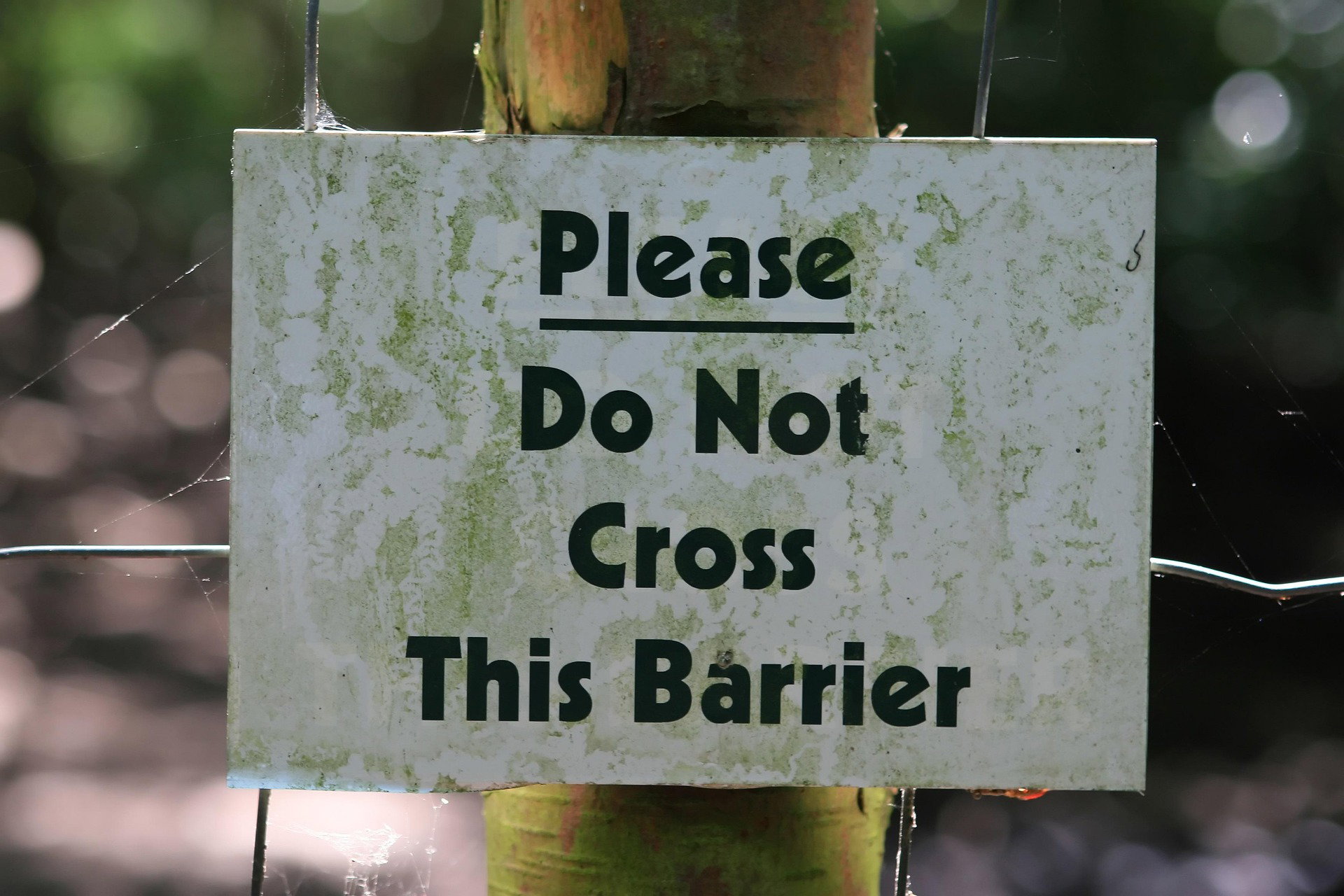
Anger is, at its simplest, the feeling that arrives when something that matters to you has been stepped on. It is the body registering a line. The trouble is that many people grew up in places where their lines did not count, where having a boundary was treated as difficult, selfish, or ungrateful, and where the safest thing was to stop noticing the line at all.
When you learn early that your no does not change anything, you learn to stop saying it. You become accommodating. You become easy to be around. You become, often, the person everyone relies on precisely because you have trained yourself out of registering your own limits. The boundary does not disappear, though. It goes underground, and anger becomes the only voice it has left.
So, the anger that embarrasses you may be the most honest part of you still doing its job. It is the part that never fully agreed to be overlooked. It is the part that kept a private record of every time you said yes when you meant no, and it is now presenting that record at an inconvenient moment, with poor timing and too much volume, because no one ever taught it a quieter way to speak.
There is a difference between an anger that wants to harm and an anger that wants to protect, and most people are carrying far more of the second kind than they believe. The protective anger is the one that says this is not okay, even when you have spent years insisting that everything is fine. Listening to it is not indulgence. It is the beginning of taking your own limits seriously again.
Shame Turns the Anger Against You
Here is where it gets complicated. For many people, the anger does not get to point outward at the thing that crossed the line. It gets turned around. The moment the feeling rises, shame meets it, and the energy that was meant to defend a boundary becomes instead a weapon used against the self.
This is the inner voice that says you are too much, that you always do this, that you are difficult and exhausting and lucky anyone tolerates you at all. Shame takes a feeling that was trying to protect you and reframes it as proof that you are the problem. The anger that should have said something is wrong here becomes a verdict that something is wrong with me.
You can usually feel the switch happen. There is a flash of heat, and then almost immediately a flood of something colder, heavier, more familiar. The flash was the boundary. The flood was the shame arriving to put it back in its place. For people who learned young that their anger made them unsafe or unloved, this sequence can be so fast and so automatic that they never even feel the original feeling. They only feel the shame.
When this is the pattern, the apology becomes reflexive. You are not sorry because you have wronged someone. You are sorry because the feeling itself has been criminalised in your own mind, and apologising is how you make it go away. Over time this teaches you that your anger is dangerous and must be managed, contained, kept from view, and the cost of that containment is that you also lose access to the information it was carrying about what you need and what you will not accept.
Learning to Stay With It Long Enough to Hear It

None of this means anger should be unleashed wherever it appears. Reaction without reflection causes real harm, and the goal is not to swing from suppression to expression as if those were the only two options. The goal is a third thing, which is the capacity to feel the anger, stay with it, and ask it what it is defending before deciding what to do.
That 'staying' with' or 'sitting with' is harder than it sounds, particularly if your nervous system learned to treat anger as a threat to your safety. The feeling may genuinely be uncomfortable to remain inside. This is why it helps to start small and slow, to notice the heat in the body before the story arrives, to put a hand on the place where the feeling lives and simply let it be there for a breath longer than you usually would. You are not acting on it. You are listening to it.
The question underneath is gentler than the feeling on the surface. What were you protecting. What line got crossed. What did you need in that moment that you did not get, perhaps not just then but for a very long time. When you ask these questions instead of reaching straight for the apology, the anger often softens, because it was never really trying to dominate anyone. It was trying to be acknowledged. Once it is, it tends to settle.
This is the part that restores something. Your anger is not a defect in your character that better people have managed to remove. It is a faculty, a form of self-respect that got buried under everything you had to do to stay safe and accepted. The capacity to know when a line has been crossed was always yours. It did not break. It went quiet, and it can be heard again. What you are reclaiming is not a new skill. It is a part of you that has been waiting, patiently and not so patiently, to be allowed back in.
When You Are Ready to Look Underneath
If your anger has felt like an enemy for a long time, or if you find yourself apologising for feelings before you have even understood them, it can help to look at all of this with someone who will not flinch from it. This is work we do with adults who are tired of being at war with their own reactions, who want to understand what sits beneath the surface rather than just keep a lid on it.
You do not need to have it figured out before you come. You do not need to arrive calm, or articulate, or sure of what you want to say. The not knowing is allowed. The mess is allowed. You can bring the anger exactly as it is, including the parts of it you have never said out loud, and we will look underneath it together.
Written by Kay Parkinson, MBACP (Accred) psychotherapist.
Place to Talk Therapies offers individual counselling in person and online across the UK and internationally. www.placetotalktherapies.co.uk